

Monday, June 27, 2016
Augmented Reality App Giveaway at ISTE 2016


Thursday, January 14, 2016
Melted Snowman

Saturday, January 2, 2016
How Do Your Students Know What They Know and When Do They Know It?
How do you know what your students know? When do you know it? What do you do once you realize that there are gaps in the learning? During my first few years of teaching I would be so disappointed on the day of the test, because I thought that my kiddos had a good grasp on the content only to see assessments roll in with incorrect answers or worse...no answers at all on some of the questions. I knew that I needed to change something and so did my students.
15 years later after much growth in my profession, my burning questions have grown to include 'How do my students know what they know and when do they know it?'. I feel strongly that students must be given the opportunity to evaluate their own knowledge in a non-punitive assessment, so that they can discover where their gaps are prior to the day of the test.
Attached is my presentation on ways to Check for Understanding presented at Marshall ISD's Destination Success Conference. The ideas go beyond the 3 question quiz, the use of Socrative, Plickers, Google Forms, and Kahoot, all of which are wonderful tools; here I share quick and easy activites that can be incorporated into your classroom tomorrow. I have blogged about many of these strategies over the years and have included the tag "check for understanding" on all of the posts related to the presentation. So, if you are looking to add a little twist to your daily warm-ups or exit tickets, you are in the right place!
15 years later after much growth in my profession, my burning questions have grown to include 'How do my students know what they know and when do they know it?'. I feel strongly that students must be given the opportunity to evaluate their own knowledge in a non-punitive assessment, so that they can discover where their gaps are prior to the day of the test.
Attached is my presentation on ways to Check for Understanding presented at Marshall ISD's Destination Success Conference. The ideas go beyond the 3 question quiz, the use of Socrative, Plickers, Google Forms, and Kahoot, all of which are wonderful tools; here I share quick and easy activites that can be incorporated into your classroom tomorrow. I have blogged about many of these strategies over the years and have included the tag "check for understanding" on all of the posts related to the presentation. So, if you are looking to add a little twist to your daily warm-ups or exit tickets, you are in the right place!
Have Students Show What They Know with Educreations
 Anyone who has followed this blog for any length of time, knows that I love my iPads due to the creativity that the devices allow students to show. I am passionate about students creating content rather than just consuming it and the more innovative that they can be while demonstrating their knowledge, the more I love it! Educreations allows for just that...it is like a blank sheet of paper just waiting for the artist to begin.
In this project, students show what they know and help others in the process. The details below include a task, a tutorial, and a rubric for the creation of math videos using the screen recorder. In this activity, students will assume the role of an online course developer and create a screencast using Educreations, an app that is easy to use and 100% reliable in uploading and sharing work.
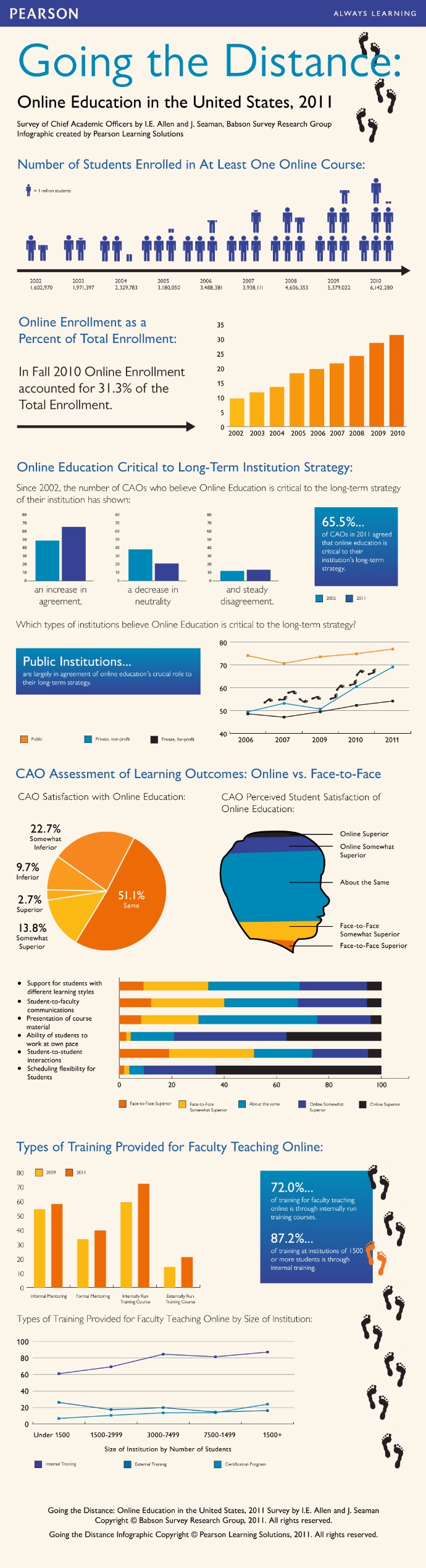
Overview: "For the past nine years the Sloan Consortium and the Babson Survey Research Group have taken a look at the state of online learning in the United States. The 2011 survey reveals that the number of students learning online has now surpassed six million, with nearly one-third of all students in higher education taking at least one online course. Last year’s annual survey revealed the largest ever year-to-year increase in online enrollment since the study began eight years ago." - Going the Distance
"Online learning has numerous benefits, including expanding course offerings, customizing and personalizing learning, giving struggling students a second chance to master a subject through online credit recovery when they fall behind, and providing a rigorous, interactive learning model. Online learning is providing the content and integration of digital tools for portable and mobile learning opportunities." - iNACOL
Your task is to assume the role of an online course developer and create a screencast using the Educreations app for our online course resources. The Screencast Tutorial that follows details your task and provides information on how to use the app. You will upload your completed project via the submission form posted.
Tutorial:


Monday, August 3, 2015
Quick and Easy Way to Learn Students' Names

Now, I start every new year by having students create name tents. It helps me learn my high school students' names quickly and easily by keeping their names in front of me at all times. The only supplies I supply is a pack of markers. The students provide the paper.

Here is how to make them:
1. Have students get a sheet of paper from their notebook.


I demonstrate the folds using 2 sheets of paper (one colored, one white) layered on top of one another. This helps the students see how far down to make the fold.
3. Make a second fold about 1/3 of the way up from the bottom of the sheet. This creates a triangle of sorts when you try to stand it on the table.


and a triangle when you look at it from the side.

4. Have each student use a marker to write their first name in the center section of the paper.

5. Have students stand their name tent on their desk.

6. At the end of the class period, direct students to place their name tent inside their notebook for use over the next few days.

Now, no more awkward moments. Use the name tents until you and the students learn everyone's name.
Sunday, August 2, 2015
#SupplySwap Info Has Been Sent...Let the Fun Begin!!

Almost 4 weeks ago now, @pamjwilson, @druinok and I decided to host a School #SupplySwap. We wrote a blog post, made a sign-up form, and then tweeted. We had nearly 30 people sign up! The perfect number...not too many to make it overwhelming!
The participants are from 19 different states with 5 participants hailing from Kentucky (Go Wildcats!) The rest of us are from Louisiana, Tennessee, Iowa, Missouri, Ohio, North Carolina, Massachusetts, South Carolina, California, Illinois, Pennsylvania, Florida, Nevada, Michigan, Georgia, Oklahoma, Wisconsin. and Alabama.
The most popular names on the list: Lisa, Lynn, Cindy and Jenn.
Most are high school teachers, but several middle school teachers joined in the fun too.
Primarily participants teach math, but we have a smattering of other disciplines represented like ELA/SS, Biology/marine
science/forsensic science, Spanish, and STEM, as well as, administrators and a school counselor.
It has been so much fun just reading
through the responses to the questions!
Just a reminder to participants, spend about $15 (excluding
shipping) and mail between July 27 and August 7. Keep your pairing a
secret until your box is received by the recipient. Your box will not be going to the person who is sending you a box, so that you will make even more new connections.
Here is a list of those who submitted twitter handles and blog addresses if you would like to check them out and make a few new friends!
@typeamathland
|
|
@druinok
|
|
@jenn_crase
|
|
@lmhenry9
|
|
@luphoward
|
|
@_cindywallace_
|
|
@amcnabb3
|
|
@numerzgal
|
|
@Sarah3Martin
|
|
@pamjwilson
|
|
@debbiehurtado
|
|
@lisaspencilbox
|
|
@sdilling
|
|
@NoraOswald
|
|
@Thejcasto
|
|
@literarylou
|
|
@cera0316
|
|
@mrschz
|
|
@rachelrosales
|
|
@viemath
|
|
@Spanishpal
|
|
@johnsonmath
|
|
@MissMossMath
|
|
@mathymeg07
|
(post adapted from The Radical Rational)
Saturday, August 1, 2015
The Should, Could, and Woulds of First Day Handouts
It is tradition...every year on the first day of school, teachers across the country hand their students some sort of letter introducing themselves, describing course content, and highlighting expectations for the year. For new teachers, this is just one more thing on the overwhelming list of to-do's. I met two such colleagues today. This will be their first year in the classroom. Both have an undergraduate degree in something other than education and they will get both professional development support and on-the-job training while serving as full-time teachers. During our conversation, this first day handout came up. Questions about what it should like and information to include quickly began to surface. There are so many different styles that I can see why someone new would want to talk it out. I think that what really matters is the content. In reviewing various samples, I identified a few things that should be included, information that could be included, and a few things that I would avoid when writing my own first day handout.
The BIG Question: What needs to go in it?
Obviously, you should include:
 |
| Editable Copy |
The BIG Question: What needs to go in it?
- your name,
- room number,
- special supplies,
- link to class website or online work space,
- availability to tutor and/or make-up work,
- any special policies in your classroom (like number of days to turn in missed work after an excused absence),
- preferred method of contact and necessary information,
- types of assignments that students will complete during the course,
- how grades will be determined (10% quizzes, 20% homework, etc.), and
- grading scale.
 |
| Links to Syllabi Pictured |
You could include a bit information about yourself (in more of a letter format) like:
- where you went to college,
- number of children or pets,
- outside interests (running marathons, hiking, sewing, etc),
- clubs you sponsor, and
- why you love the subject and/or grade level you teach.

- sharing things that are too personal (it is always safer to keep it professional),
- listing a classroom rule or privilege that contradicts school policy,
- grammatical errors and run-on sentences (ask a friend to proof your letter), and
- food likes and dislikes (this is a personal preference and I would certainly share if asked by a parent, but I prefer to leave it out of the first day letter to students... and yes, I actually saw an example with this on it).


Subscribe to:
Posts (Atom)